

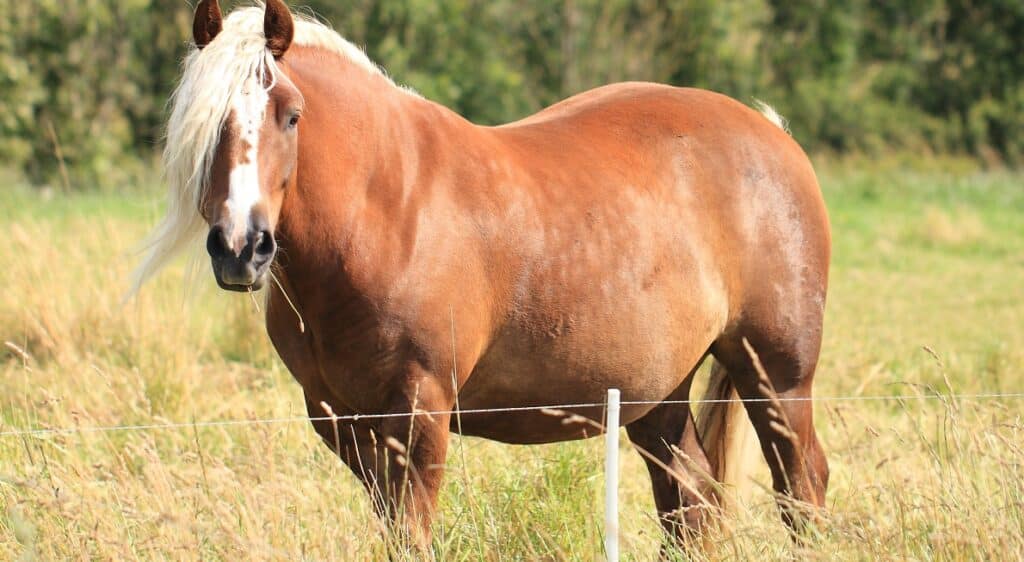


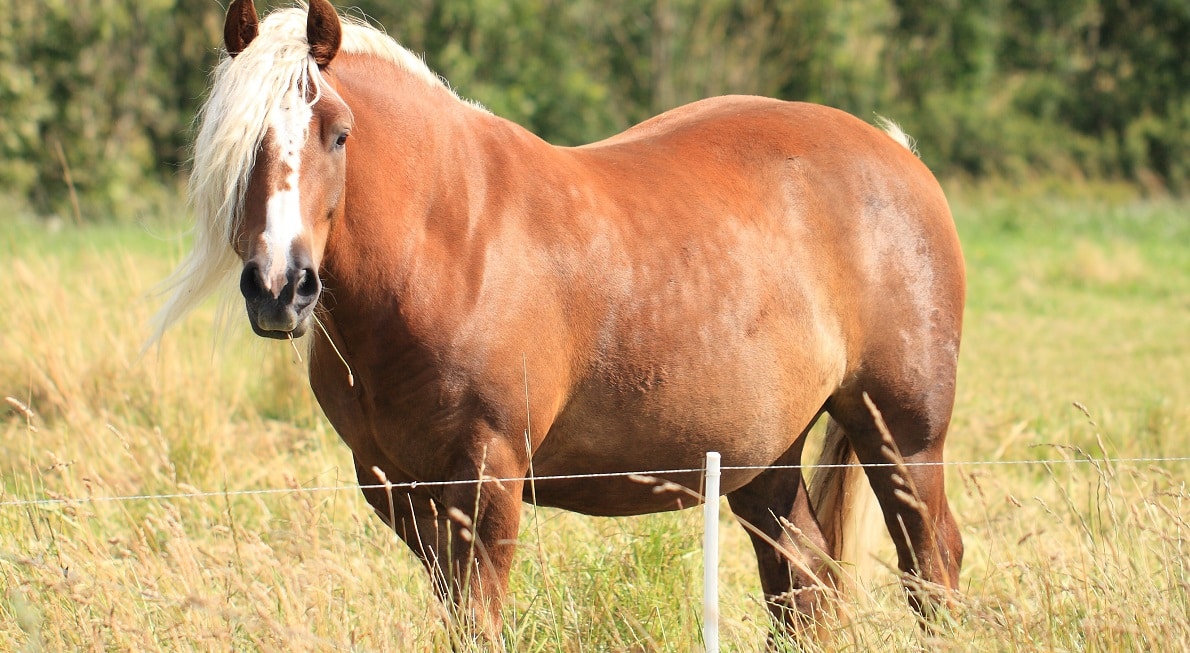
An overweight horse does not fit well in his or her skin. The cause of a fat horse can have several reasons. As an example, feeding too much energy-rich food or too little movement. This is why it is important that the labor and food are well-matched. When it is necessary to lose weight, it is important to move a lot through labor and the meadow. In addition, the concentrate can be limited. The carbohydrates (sugar) from the concentrates are converted into fat into the body, which can lead to growth.
It may sound very simple, but this often turns out not to be the case: getting a fat horse back to the right weight. The most important thing is to make sure that the amount of work and nutrition are well matched. When a horse needs to get thin, a lot of exercise is needed in combination with less (energy-rich) nutrition. Concentrated feed can be limited in many cases, this often contains more fast carbohydrates (sugars) which the body converts into fat which causes the horse to gain weight. Ultimately, the goal is for fat horses to take in less energy than they expend, causing them to burn fat reserves.
It is very important to lose weight with care. If a horse loses weight too quickly, there can be risks. For example, if you suddenly give a horse or pony less to eat, a metabolic disorder may occur and hyperlipaemia may occur (fat in the blood).
It may be tempting to reduce your horse’s roughage to help it lose weight—don’t do this! In nature, horses eat small amounts of roughage throughout the day. They obtain energy from the fibers in roughage through fermentation in the cecum and large intestine. A horse cannot cope with a diet lacking structure; they need roughage to keep their digestive system working properly.
If you already feed little or no concentrate, the roughage is likely the main contributor to your horse’s weight. In that case, it’s wise to take a critical look at the roughage you are feeding.
Most pastures in the Netherlands are not ideally suited for horses, especially not when you’re trying to get your horse to lose weight. In most cases, horses will gain weight from grass. Grass is rich in energy, which is exactly what you don’t want to feed your horse, and it also contains little structural fiber, which an overweight horse actually needs. It may therefore be necessary to limit grazing time and keep your horse in a paddock with access to low-energy, high-fiber hay.
Of course, your horse should always have access to sufficient roughage, whether it’s overweight or underweight. Horses should consume about 1.5–2% of their body weight in roughage per day. The sugar content in hay ranges from 8 to 15%, averaging around 10% in the Netherlands. This means you can make significant improvements by reviewing your roughage ration carefully.
Avoid silage or haylage; feed dry hay instead and have it analyzed so you know the levels of sugar, calories, and protein.
Not everyone has access to the ideal hay, and finding a suitable batch can be challenging. In such cases, you can add straw to your ration. Straw is low in sugar but high in fiber. To prevent impaction, always mix hay and straw together, and if you decide to start feeding straw, introduce it gradually so the digestive system can adjust. Never feed straw on an empty stomach, and always ensure your horse receives more hay than straw!
If you feed your horse or pony concentrates, make sure the amount corresponds with the amount of exercise they get. If your horse does little or no work, it’s often best to stop feeding concentrates and switch to a vitamin/mineral supplement (also known as a balancer), such as Hartog Essential.
In such cases, you can also choose to feed Hartog Lucerne Mix or Hartog Lucerne Plus. These contain vitamins, minerals, trace elements, and amino acids, the essential building blocks your horse needs to function well. Since these are roughage-based products, they help maintain a natural feeding pattern and support a healthy digestive system.
Keep in mind that when reducing concentrates, your horse must still receive enough nutrients. Average hay lacks sufficient vitamins and minerals to keep your horse healthy and in optimal condition.
At Hartog, we are always happy to review your current feed ration and help you make any necessary adjustments. Do you have questions about your horse’s diet or any other topic? Feel free to contact us.
Receive the latest offers, exclusive content and news from Hartog Family Farms.