


Stomach ulcers are a common concern in horses, especially in sport horses, with a prevalence of up to 90%. They can affect comfort, appetite, behaviour and performance. While diagnosis and treatment should always be discussed with a veterinarian, nutrition plays an important role in supporting horses that are prone to gastric ulcers. A broader explanation of causes, symptoms and nutritional management is available in our guide to stomach ulcers in horses.
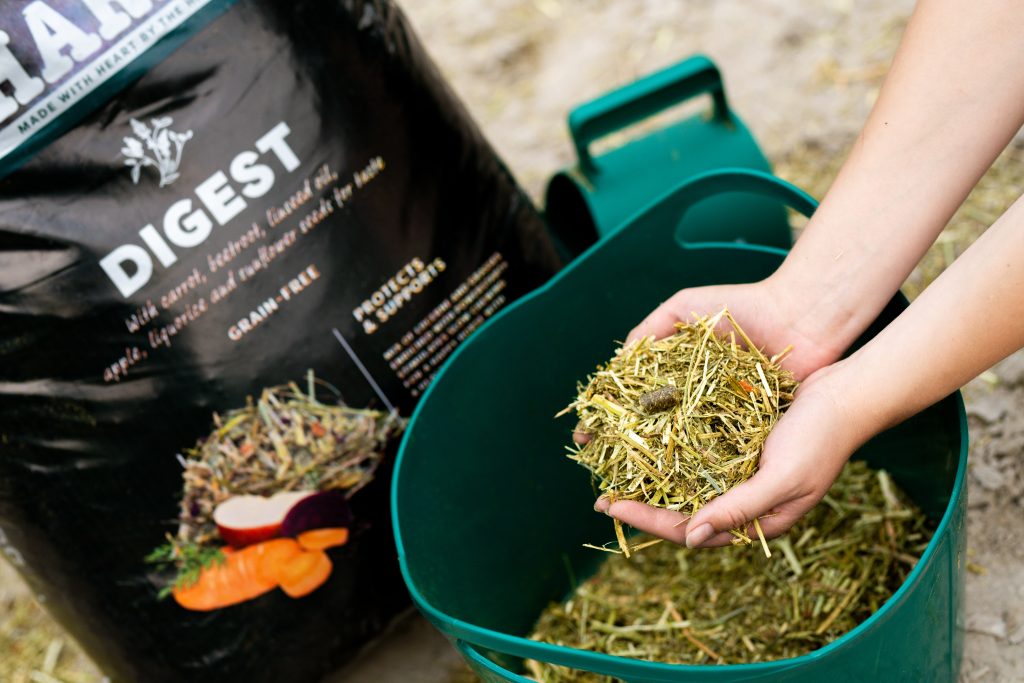
Hartog Digest is a fibre-rich roughage mix developed to support gastric health through structure, chewing time, saliva production and a low sugar and starch content. By adding extra fibre and volume to the ration, Hartog Digest can help support a healthier feeding routine for horses that need additional stomach support.
Horses naturally produce stomach acid throughout the day, even when they are not eating. At the same time, horses only produce saliva when they chew. This makes regular forage intake essential, because chewing stimulates saliva production and saliva helps buffer stomach acid.
For horses prone to stomach ulcers, long periods without forage, high-starch meals and intensive training can place extra pressure on the stomach. A ration built around sufficient roughage, structured fibre and controlled sugar and starch intake can therefore help support gastric health.
More background on risk factors and feeding advice can be found in our guide to gastric ulcers in horses.
Hartog Digest fits into this approach by increasing the amount of fibre in the ration and by creating an additional roughage feeding moment during the day.
One of the most important benefits of Hartog Digest is its structure. Hartog Digest is a structure-rich roughage mix that encourages chewing. More chewing means more saliva production, and saliva plays a key role in naturally buffering stomach acid.
Because horses only produce saliva while chewing, structured fibre-based roughage can help support the stomach’s natural protective mechanisms. This makes Hartog Digest a useful addition for horses that benefit from longer eating time and more fibre in the ration.
Hartog Digest can also be used as an extra roughage feeding opportunity. This helps reduce the risk of long periods without forage and supports a more natural feeding pattern.
The specific properties of Hartog Digest are further explained in the comparison between Lucerne Mix and Hartog Digest.
Rations high in sugar and starch can contribute negatively to gastric health. Many sport horses receive concentrated feeds that are relatively rich in sugar and starch, especially when extra energy is needed for performance.
Hartog Digest is formulated with a low sugar and starch content. This makes it a suitable feed choice for horses that are prone to stomach ulcers or need a more stomach-friendly ration.
Hartog Digest can also be mixed with standard concentrated feeds. This promotes a more gradual intake of sugars and starches and supports a feeding pattern that better reflects the horse’s natural eating behaviour.
The role of starch in the ration is explained further in our article about starch in horse feed.
For an even lower sugar and starch ration, Hartog Digest can be combined with low sugar and starch feeds such as Hartog Essential or Hartog Daily. These combinations can help provide the required vitamins, minerals and trace elements while keeping the ration focused on fibre. For this type of ration, Hartog Essential as a balancer for horses can be a useful supporting option.
Hartog Digest contains added magnesium oxide and lucerne. Lucerne is naturally rich in calcium, and both calcium and magnesium oxide are known for their buffering properties, helping to neutralise stomach acid.
In addition, lucerne provides fibre, which contributes to chewing activity and saliva production. Together with the volume provided by fibre in the stomach, these ingredients help support a more stomach-friendly feeding strategy
The nutritional role of lucerne is explained further in our article about lucerne for horses.
Hartog Digest has a high fibre content, which gives the feed a natural volume. Adding volume to the stomach can help support a more stable stomach environment.
This works alongside the other nutritional features of Hartog Digest: structured fibre stimulates chewing, chewing stimulates saliva production, saliva helps buffer stomach acid, and magnesium oxide and calcium add further buffering support.
For horses prone to stomach ulcers, this combination makes Hartog Digest a practical way to increase fibre intake and support gastric balance through the daily ration.
During exercise and movement, increased pressure within the abdomen of the horse can cause stomach acid to splash onto the sensitive upper part of the stomach. This can increase the risk of stomach ulcers. Feeding roughage before exercise appears to have a buffering effect and may help reduce this risk.
Hartog Digest can help form a fibrous roughage layer in the stomach. This layer helps reduce direct contact between stomach acid and the sensitive upper region of the stomach.
For horses in work, Hartog Digest can therefore be used as part of a feeding strategy that supports the stomach before training or exercise.
Sport horses often need extra nutrients to support their workload. Traditionally, this is often supplied through concentrated feeds that may be higher in sugar and starch.
Hartog Digest offers an alternative way to provide nutrients through fibre instead of relying mainly on high sugar and starch ingredients. This shift in feeding strategy supports a more fibre-based ration and can help create a healthier digestive environment.
Hartog Digest can be used alongside other feeds in the ration to help increase fibre intake, add structure and support horses that are sensitive to sugar and starch. This fibre-focused approach also fits within broader advice on feeding sport horses.
Hartog Digest is not only relevant for the stomach. It is also designed to support the wider digestive system through its fibre-rich composition and added digestive support ingredients.
This makes Hartog Digest suitable for horses that need support for both gastric comfort and digestive balance. The role of digestive support ingredients is explained further in our article about prebiotics, probiotics and postbiotics for horses.
Hartog Digest can be a valuable addition for horses that need nutritional support for gastric health, especially horses that:
Hartog Digest is a practical nutritional solution for horses prone to stomach ulcers. It supports gastric health by increasing the total amount of roughage in the ration. This encourages chewing and saliva production, which are important for maintaining a healthy stomach environment. In addition, it provides a low-sugar and low-starch feed option and contains buffering ingredients such as magnesium oxide and calcium-rich lucerne.
By adding volume, structure and fibre-based nutrients to the ration, Hartog Digest can play an important role in supporting horses that need extra stomach care.
Incorporating Hartog Digest into the daily ration can be a proactive step towards supporting a healthy stomach, digestive comfort and optimal performance.
Yes. Hartog Digest is designed to support gastric health through structured fibre, increased chewing time, saliva production, low sugar and starch content and buffering ingredients such as magnesium oxide and calcium-rich lucerne.
Hartog Digest is a structure-rich roughage mix. Its fibre structure encourages chewing, and chewing stimulates saliva production. Saliva helps buffer stomach acid and supports the stomach’s natural protection.
Rations high in sugar and starch can negatively contribute to gastric health. Hartog Digest has a low sugar and starch content, making it suitable for horses that need a more stomach-friendly ration.
Hartog Digest can be used as a roughage feeding moment before training. Roughage before exercise may help create a fibrous layer in the stomach and support buffering, reducing the risk of acid splashing into the sensitive upper part of the stomach.
Yes. Hartog Digest can be mixed with standard concentrated feed to support a more gradual intake of sugar and starch, and to add more fibre and structure to the meal.
For a ration with even lower sugar and starch levels, Hartog Digest can be combined with low sugar and starch feeds such as Hartog Essential or Hartog Daily. These combinations can help provide vitamins, minerals and trace elements while keeping the ration fibre-focused.
Hartog Digest is a nutritional support product and should not be presented as a treatment. If you suspect your horse has stomach ulcers, consult a veterinarian for diagnosis and treatment advice. More information about signs, causes and nutritional support is available in our guide to stomach ulcers in horses.
Receive the latest offers, exclusive content and news from Hartog Family Farms.
