

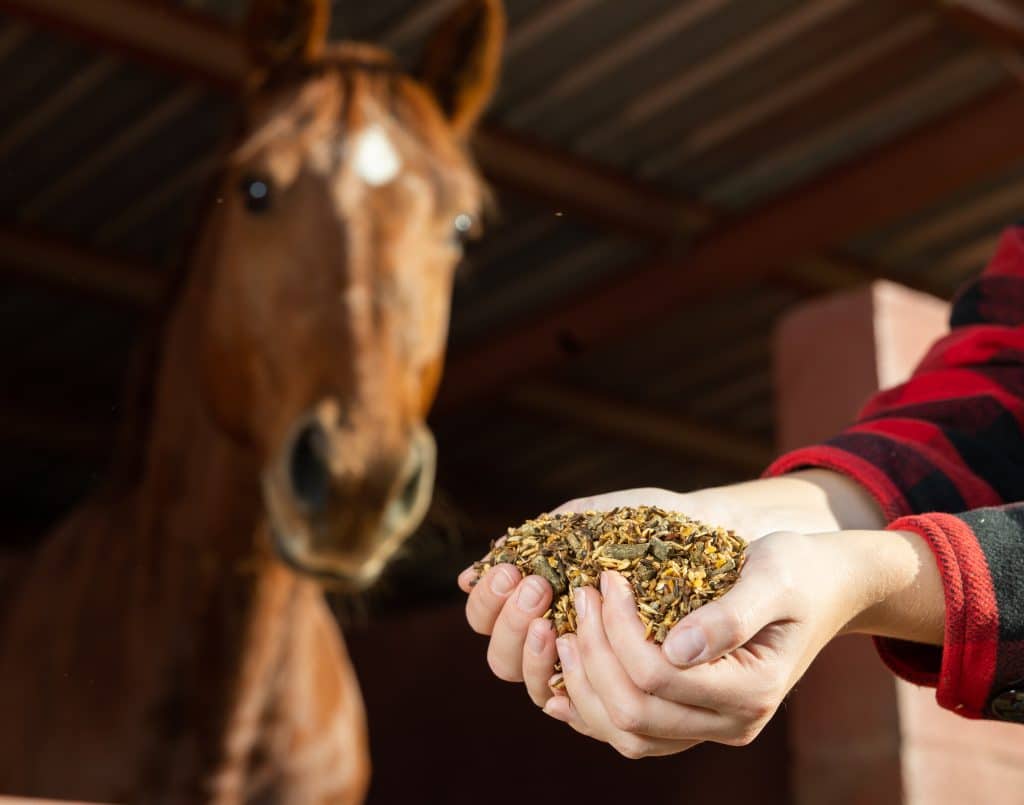


Feeding concentrated feed isn’t always necessary for every horse, instead, a balancer can also be an option. For horses that don’t need extra energy due to being overweight or prone to becoming overly energetic, it might be wise to skip concentrated feed entirely. However, this doesn’t mean that your horse’s diet should consist solely of simple roughage like hay or pasture grazing. If you choose to forgo concentrated feed, it’s crucial to include a balancer in your horse’s diet.
A balancer is a vitamin and mineral pellet specifically designed to provide all the essential nutrients your horse or pony needs daily, in addition to roughage (and, of course, fresh water). If your horse’s diet consists only of pasture grazing or roughage without any supplements, long-term deficiencies can develop because not all the necessary nutrients are naturally present — even if your horse isn’t performing heavy work.
Also known as vitamin and mineral pellets, balancers are highly concentrated in vitamins, minerals, and trace elements, requiring only a small daily portion. This makes them far more nutrient-dense than traditional concentrated feed. Because of this, balancers are suitable for a wide variety of horses. For example, the Hartog Essential balancer provides daily vitamins and minerals, as well as additional supplements like vitamin E and biotin.
Unlike balancers, like the Hartog Essential, standard concentrated feed is primarily designed to provide energy (and sometimes protein). As a result, concentrated feed contains a lower concentration of vitamins, minerals, and trace elements, as well as relatively high levels of sugar and starch. On average, a 600kg horse requires about 2kg of concentrated feed per day to meet its nutrient needs.
Tip: Always check the recommended feeding quantities on the packaging or the product’s website to ensure proper nutrition.
Concentrated feed only delivers adequate vitamins, minerals, and trace elements if the recommended daily amount is provided. However, many horse owners feed less than the suggested quantity to maintain a low-sugar and low-starch diet, which aligns more closely with a horse’s natural needs. This approach is especially important for horses prone to gastric ulcers, colic, laminitis, or muscle conditions like PSSM. In these cases, a roughage-based diet supplemented with a balancer is the ideal solution. This ensures your horse receives the necessary fibre, vitamins, minerals, and trace elements without the unnecessary sugars and starches. Nervous horses or those prone to becoming overly energetic may also benefit significantly from a diet that includes a balancer instead of concentrated feed.
If you reduce the amount of concentrated feed, for example to a handful or a quarter of a scoop, your horse won’t receive enough vitamins, minerals, and trace elements. By replacing that small portion of concentrated feed with the recommended daily amount of a balancer, you can ensure your horse gets all the essential nutrients without adding excess energy to their diet.
Tip: Always check the recommended daily amount for each specific balancer on its packaging. Note that measuring cups from one brand may not be suitable for use with another product.
If you’re already feeding the full recommended amount of concentrated feed, there’s no need to supplement your horse’s diet with a balancer. For vitamins, minerals, and trace elements, more isn’t always better, as excessive amounts can put unnecessary strain on the horse’s body.
If you’re feeding only half the recommended quantity of concentrated feed, you can supplement with up to half the recommended amount of a balancer. For very small portions of concentrated feed (e.g., a handful for taste), it’s best to feed the full daily amount of a balancer. Modern balancers, such as the Hartog Essential, are palatable and often as appealing to horses as concentrated feed, so they don’t need to be diluted or hidden within other feed.
Horses with higher protein or energy requirements, such as performance or older horses, may need more than what a balancer and roughage can provide. In such cases, combining a balancer with a forage mix can meet their increased nutritional needs. For example, adding the Hartog Lucerne Mix or Hartog Lucerne Plus to the Hartog Essential balancer provides additional protein and energy, allowing you to offer even high-demand horses a concentrated feed-free diet. Additionally, forage mixes slow down feed intake and stimulate saliva production, which is excellent for digestion.
Curious about how to choose the right balancer for your horse? Check out our guide: “Why choose a balancer for your horse?”
Receive the latest offers, exclusive content and news from Hartog Family Farms.