

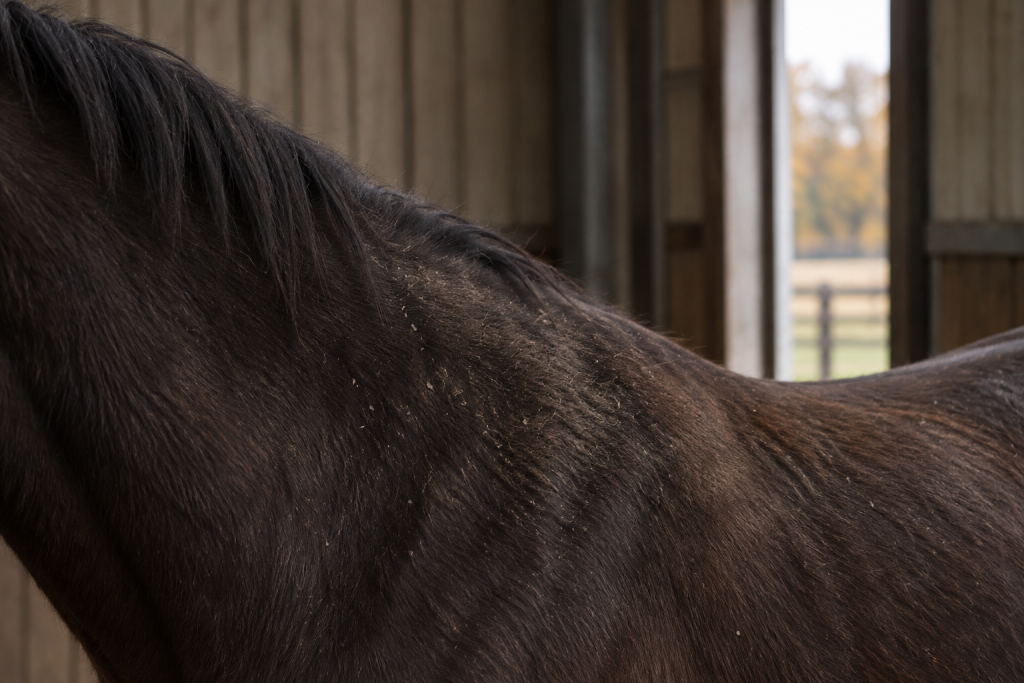

A dull coat in your horse can have several causes, such as nutritional deficiencies, insufficient omega-3 fatty acids, housing, seasonal influences, age or parasites. A balanced diet, sufficient high-quality forage and regular grooming can contribute to a healthy, shiny coat. If the coat remains dull for a long period of time or if there are other symptoms, it may be advisable to consult a veterinarian or equine nutritionist.
A healthy, shiny coat can tell you a lot about your horse’s overall condition. Does your horse have a dull, dry or lifeless coat? There can be several reasons for this. The condition of the coat can be influenced by nutrition, grooming, management and the horse’s health.
In this article, we discuss the most common causes of a dull coat and what you can do about them!
The skin and coat, just like the rest of the body, need nutrients to remain healthy and function optimally. A deficiency in these essential nutrients can therefore result in a dull coat.
Nutrients that are important for a healthy, shiny coat include high-quality proteins, amino acids, fatty acids, vitamins and minerals. Amino acids such as lysine and methionine, for example, play an important role in the production of keratin, an important component of hair.
Trace elements such as zinc, copper and biotin also play a role in maintaining a healthy coat. A deficiency in these elements can lead to reduced shine, slower hair growth or a less intense coat colour.
Solutions:
Omega-3 fatty acids can support coat health and hair growth. Horses can obtain significant amounts of omega-3 fatty acids from their diet in the form of alpha-linolenic acid (ALA). However, the conversion of ALA into other fatty acids is not very efficient. In addition, concentrate feeds often contain higher levels of omega-6 fatty acids compared with omega-3 fatty acids. It may therefore be beneficial to supplement omega-3 fatty acids in the diet. Omega-3 fatty acids are found in high amounts in flaxseed products, such as flaxseed oil.
Solutions:
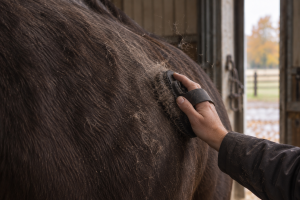
Dirt, dust and loose hairs can reduce the shine of the coat. Regularly grooming your horse helps distribute the natural oils of the skin throughout the hair and removes dirt and dust. Brushing also improves blood circulation in the skin, allowing nutrients to reach the hair follicles more effectively. This plays an important role in maintaining a healthy, shiny coat.
Solution:
Other possible causes of a dull coat include housing and seasonal influences. Breed, age and even parasites can also play a role in the shine of your horse’s coat. If the shine does not return, it may therefore be advisable to determine the underlying cause together with your veterinarian.
A dull coat can be a sign that something could be improved in your horse’s nutrition, grooming or health. By first looking at the basics — a balanced diet and good management — and making sure these are in order, the condition of the coat may improve.
If the coat remains dull for a long period of time, or if other symptoms also occur, it may be advisable to consult a veterinarian or equine nutritionist to investigate the underlying cause.
What are the most common causes of a dull coat?
The condition of the coat can be influenced by nutrition, grooming, management and the horse’s health.
Which nutrients are important for a healthy, shiny coat?
Nutrients that are important for a healthy, shiny coat include high-quality proteins, amino acids, fatty acids, vitamins and minerals. Amino acids such as lysine and methionine, for example, play an important role in the production of keratin, an important component of hair.
Is your horse getting enough omega-3 fatty acids?
Omega-3 fatty acids can support coat health and hair growth. Horses can obtain significant amounts of omega-3 fatty acids from their diet in the form of alpha-linolenic acid (ALA). However, the conversion of ALA into other fatty acids is not very efficient. In addition, concentrate feeds often contain higher levels of omega-6 fatty acids compared with omega-3 fatty acids. It may therefore be beneficial to supplement omega-3 fatty acids in the diet. Omega-3 fatty acids are found in high amounts in flaxseed products, such as flaxseed oil.
Does grooming influence the appearance of the coat?
Dirt, dust and loose hairs can reduce the shine of the coat. Regularly grooming your horse helps distribute the natural oils of the skin throughout the hair and removes dirt and dust. Brushing also improves blood circulation in the skin, allowing nutrients to reach the hair follicles more effectively. This plays an important role in maintaining a healthy, shiny coat.
What are other possible causes of a dull coat?
Other possible causes of a dull coat include housing and seasonal influences. Breed, age and even parasites can also play a role in the shine of your horse’s coat. If the shine does not return, it may therefore be advisable to determine the underlying cause together with your veterinarian.
