

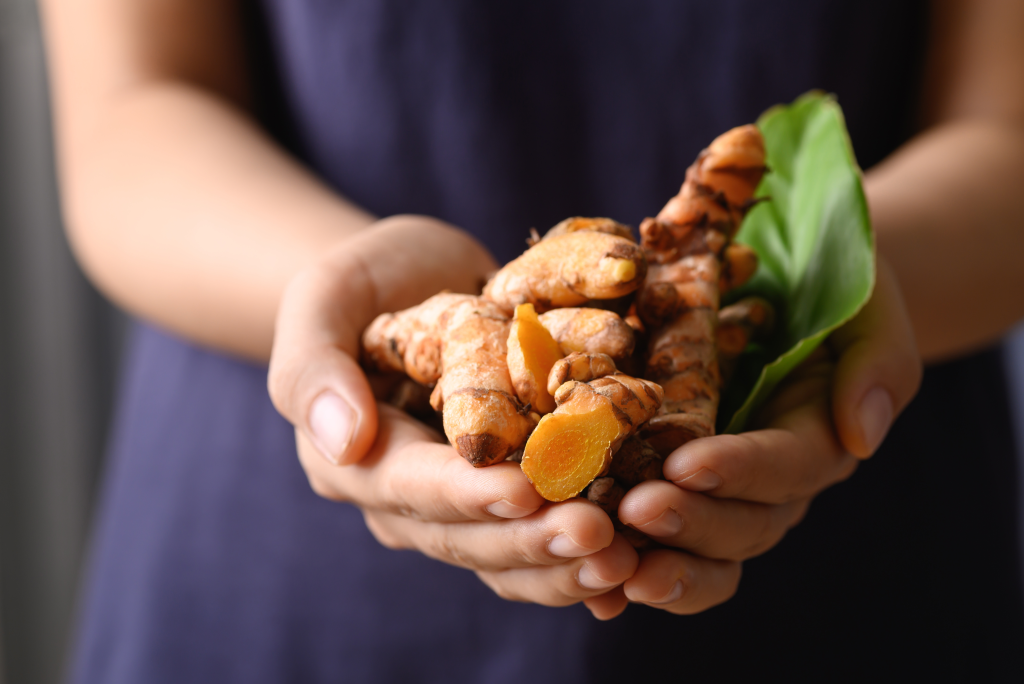

Turmeric is a herbal plant that naturally contains curcumin, a compound known for its antioxidant and potential anti-inflammatory properties. As a result, turmeric has become a popular ingredient in supplements for horses. Although these findings are promising, it is important to emphasize that research in horses is still limited.
Turmeric is increasingly being used as an ingredient in supplements for horses. Horse owners with older horses or horses with stiff joints in particular are showing interest in this herb. But what exactly is turmeric, and what does research say about its potential benefits?
In this article, you will learn what turmeric is, why it receives so much attention, and what to consider when feeding it to your horse.
Turmeric, also known as yellow root, comes from the plant Curcuma longa. This plant belongs to the same family as ginger and has been used for centuries in Asian cuisine and traditional herbal medicine.
Turmeric’s distinctive yellow colour comes from natural compounds called curcuminoids. The best known of these is curcumin. This particular compound is the focus of much scientific research into the potential health benefits of turmeric.
Researchers have found that curcumin can influence various processes in the body. These processes are involved in inflammation, oxidative stress and the immune system.
Curcumin is also being studied for its antioxidant properties. Antioxidants help protect the body against damage caused by free radicals. These are produced during normal metabolic processes, among other things, but their levels can increase due to factors such as exercise and environmental influences.
Because of these properties, curcumin has become one of the most widely studied plant-derived compounds in both human and veterinary nutrition.
The potential anti-inflammatory effect of turmeric is probably the main reason why horse owners are interested in this herb.
Several studies suggest that curcumin may influence substances and enzymes involved in inflammatory processes. For this reason, it is considered a natural compound that may support the body in regulating inflammatory responses.
Curcumin is also being studied for its potential supportive role in joint problems and osteoarthritis. Some studies suggest that curcumin may influence the production of certain pro-inflammatory substances.
Although these results are promising, it is important to emphasize that research in horses is still limited. More research is needed to better understand the effects and optimal dosages.
Because of the broad biological properties of curcumin, it is used in supplements for a range of purposes.
Turmeric is supplemented in horses with, among other things:
Research is also being carried out into whether curcumin may play a role in supporting the stomach, skin and general health.
It is important to remember that turmeric remains a supplement. This means that it should always be used as an addition to an appropriate diet and good care. It is also not a substitute for veterinary treatment. Always consult your veterinarian first if your horse has, or may have, health problems.
In addition to joints, there is also interest in the potential influence of turmeric on skin and hoof health.
This is mainly related to the antioxidant properties of curcumin. Oxidative stress can affect various tissues in the body, including the skin.
Although there is currently little to no specific research available on turmeric and skin and hoof health in horses, the herb is regularly included in supplements aimed at the general support of skin, coat and hooves.
Turmeric is usually fed in powder form or incorporated into a supplement.
The main challenge with curcumin is that it is relatively difficult for the body to absorb. For this reason, many supplements contain additional ingredients that may improve its availability for absorption.
Because curcumin dissolves better in fat than in water, it is often combined with an oil source. Piperine is also sometimes added. This is a natural compound derived from black pepper that may support the absorption of curcumin.
The optimal amount and absorption vary depending on the product and the individual horse. Therefore, always follow the manufacturer’s feeding recommendations.
Turmeric is generally safe to feed to horses in commonly used amounts, but more is not automatically better.
If your horse is receiving medication or has specific medical conditions, it is advisable to consult a veterinarian before adding a supplement to your horse’s diet.
Turmeric is a herbal plant that naturally contains curcumin, a compound known for its antioxidant and potential anti-inflammatory properties. As a result, turmeric has become a popular ingredient in supplements for horses.
Research findings are particularly interesting in relation to joint health and support of the musculoskeletal system. At the same time, it is important to remain realistic: although the initial results are promising, more research is needed to fully understand the effects in horses.
As part of a balanced diet, turmeric may be an interesting addition for horses that could benefit from extra support.
What is turmeric? Turmeric, also known as yellow root, comes from the plant Curcuma longa. This plant belongs to the same family as ginger and has been used for centuries in Asian cuisine and traditional herbal medicine.
Does turmeric have anti-inflammatory properties? Several studies suggest that curcumin may influence substances and enzymes involved in inflammatory processes. For this reason, it is considered a natural compound that may support the body in regulating inflammatory responses.
What is turmeric used for in horses? Turmeric is supplemented in horses with stiff or sensitive joints, age-related mobility problems, metabolic challenges and a need for additional immune system support. Research is also being carried out into whether curcumin may play a role in supporting the stomach, skin and general health.
How do you use turmeric for horses? Turmeric is usually fed in powder form or incorporated into a supplement. The main challenge with curcumin is that it is relatively difficult for the body to absorb. For this reason, many supplements contain additional ingredients that may improve its availability for absorption.
What should you consider when feeding turmeric? Turmeric is generally safe to feed to horses in commonly used amounts, but more is not automatically better. If your horse is receiving medication or has specific medical conditions, it is advisable to consult a veterinarian before adding a supplement to your horse’s diet.
Receive the latest offers, exclusive content and news from Hartog Family Farms.